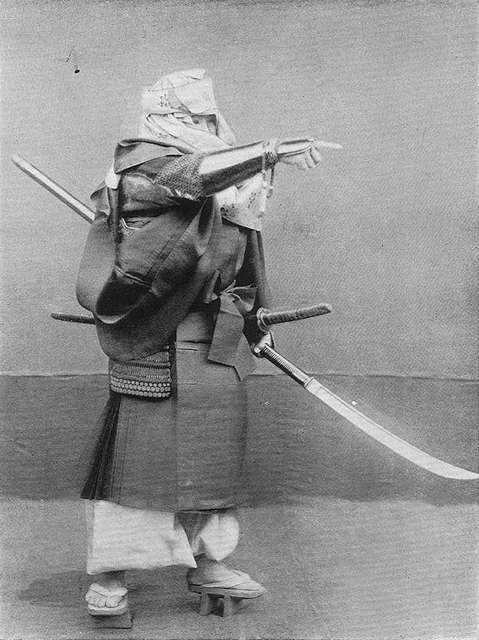
The Sohei, or ‘warrior monks’ of Japan, are one of the most famous and iconic figures of Japanese history. These martial monks were a powerful force during medieval times, and their legacy has lived on in popular culture and folklore. Sohei were highly trained warriors who defended Buddhist temples and fought in wars to protect their faith. They were feared by their enemies, respected by their allies, and held in awe by the common people. Their skill in martial arts, combined with their spiritual devotion, made them uniquely suited for their role as defenders of the faith. This article will explore the history of these fascinating figures, from their origins in the medieval period to their decline in the 16th century. We will also look at the various roles they played in Japanese society, from warriors to religious leaders.
A Brief History of Japan’s Warrior Monks
The first warrior monks appeared in Japan during the 12th century, during a time of great social upheaval. The aristocratic Heian Period was giving way to the more turbulent and militaristic feudal era. This change was reflected in the Buddhist monasteries that had served as centers of learning and philosophy throughout the previous era. In the new feudal order, these monasteries were neglected and left to rot in favor of more practical pursuits. The warrior monks, or Sohei, were an attempt by Buddhist monks to retain their position in society during these uncertain times. These warrior monks were well-trained in martial arts and were expected to serve as strong warriors to protect the Buddhist temples from bandits and looters.
The Training and Weapons of the Sohei
The Sohei were heavily trained in martial arts and used a varity of weapons, like kenjutsu (Japanese swordsmanship), Sōjutsu (the art of using a yari, or spear), Naginatajutsu (the art of using a naginata, or halberd), and Kyūdō (art of using a yumi, or bow and arrow) being most popular. These monks also studied the ancient art of bojutsu, the use of the staff as a weapon, as well as taiho-jutsu, the art of restraining and capturing foes. Weaponry was not the only skills these monks were trained in, however. The Sohei learn an assortment of useful techniques from river-fording to arson.
The Role of the Sohei in Japanese Society
The warrior monks were not only skilled in martial arts and weapons, they were also expected to have a strong religious commitment. Early Sohei were expected to hold the qualities of a good Buddhist monk: they were expected to be well-read, thoughtful, and have a strong spiritual connection. The warrior monks were expected to be just as literate as any scholar: they were well-read in Buddhist texts and philosophy. They were also expected to be well-educated in the sciences and other secular knowledge. The Sohei were expected to be well-versed in the arts, such as poetry, calligraphy, and the composition of songs and musical pieces. They were also expected to be knowledgeable in the sciences and other secular subjects, such as mathematics, astronomy, and medicine.
Some warrior monks were even expected to be skilled in the creation of poetry and haikus. They had to abide by the same restrictions as other monks as well: they were forbidden from drinking alcohol, eating after midday, and engaging in sexual activity. They were expected to work to earn their living, often by farming or manual labor.
The Decline of the Warrior Monks in Japan
To facilitate the unification of Japan, Oda Nobunaga implemented policies to weaken the Buddhist institution, such as taking away their lands and launching a “Sword Hunt” to eradicate the warrior monks. This “Sword Hunt” required all civilians, including monks, to surrender their weapons.
This event began the Sohei’s decline, but they still existed until the end of the 16th century and even fought alongside both Tokugawa Ieyasu and his rival Toyotomi Hideyoshi. With Ieyasu’s victory in 1603, the unrest of the Sengoku Jidai era was brought to a close. Consequently, the warrior monks became less necessary and the political power of Buddhist temples was greatly diminished. Despite this, many temples remained operational, but with restricted autonomy from the Shogunate. Primarily, their duties were limited to record keeping, funerals, and tourism.
The Legacy of the Sohei in Modern Times
The warrior monks were a fascinating and powerful force in Japanese society during the medieval period. Their legacy has lived on in popular culture, appearing in video games, television shows, and even inspiring characters in modern novels. The monks have also been depicted in comics, such as in the manga series Vagabond, Naruto, and many others. The warrior monks are also a common subject in history books, where they are often discussed as examples of the development of martial arts in Japan. The practice of martial arts by monks continues to this day, with the martial arts of the Sohei being practiced in modern times. These monks are not only remembered for their role in history, but also as a source of inspiration and a symbol of discipline and strength.
Conclusion
The warrior monks are one of the most fascinating figures of Japanese history. During a time of great social upheaval, these monks attempted to retain their place in society by becoming warriors. They were well-trained in martial arts and expected to be well-read and spiritually devoted. These monks were feared by their enemies, respected by their allies, and held in awe by the common people. Although the practice of taking swords and other weapons was banned in the 16th century, the martial arts continued to be practiced by monks, with the emphasis shifting to using staffs and staves. The legacy of the warrior monks has lived on in popular culture and history books, inspiring people with their dedication and discipline.