Shikoku Pilgrimage Accommodation Guide: Where to Stay Along Japan’s 88 Temple Trail
The Shikoku Pilgrimage — also called the Shikoku Henro — is a 1,200 km spiritual circuit visiting 88 temples across Tokushima, Kochi, Ehime, and Kagawa. Whether you’re walking sections, taking a bus-supported route, or joining a guided package, choosing the right Shikoku pilgrimage accommodation will shape your experience.
This guide covers the types of stays you’ll find (ryokan, minshuku, temple lodgings), recommended places by region, booking tips, estimated costs, and affiliate-friendly booking options via Booking.com, Vrbo, and Klook.
What is the Shikoku Pilgrimage?
The Shikoku 88 Temple Pilgrimage route: a 1,200 km journey across Tokushima, Kochi, Ehime, and Kagawa.
The pilgrimage honors the monk Kōbō Daishi (Kūkai). Pilgrims—called henro—visit 88 sacred temples, traditionally walking the full route. Today many people combine walking with private transport, buses, or guided tours.
Types of Accommodation for Pilgrims
Ryokan
Traditional Japanese inns with tatami rooms and local meals. Expect futon bedding and a cultural stay — often pricier but very comfortable after a long day on the trail.
Minshuku (Family-Run Guesthouses)
Smaller and budget friendly; meals are commonly included and hosts often offer local tips. Many minshuku are walkable from nearby temples.
Temple Lodgings (Shukubō)
Staying overnight at a temple provides a quiet, spiritual experience with vegetarian meals and morning rituals. Shukubō are limited in capacity — book early where possible.
Vacation Rentals (Vrbo / Private Houses)
For groups, families, or multi-day stays in towns, Vrbo-style rentals give privacy and kitchen access. Great when you need a rest day off the trail.
Recommended Accommodation Options (by Region)
Below are sample picks and the best places/types to search. Replace placeholders with your real affiliate URLs.
Tokushima Prefecture (Start of many pilgrims)
Ryokan Yurino (Wajiki area) Traditional ryokan near early temples — good for early-route pilgrims.
If you prefer partial guiding, luggage transfer, or curated experiences, these options are useful. They’re also a good way to include affiliate bookings for readers who want low-effort planning.
2-Day Setouchi Tour: Shikoku Pilgrimage & Naoshima Book on Klook
Seven Sanuki Temples Pilgrimage (half-day) Book on Klook
How and When to Book Accommodation
Booking strategies vary by season and route segment:
Book ahead for Cherry Blossom season, Golden Week (late April–early May), and Obon (mid-August).
For walking pilgrims: reserve blocks for the first few nights, then book as you progress, unless you’re in a remote stretch with few options.
Temple lodgings and small minshuku sometimes require phone/email bookings. If you don’t speak Japanese, use a translation app or book a nearby hotel on Booking.com and ask the front desk to help with local calls.
Estimated Costs & Daily Budget
Costs vary by season, accommodation type, and whether you include guided tours.
Carry some cash — small inns and temples often don’t accept cards.
Lightweight sleeping essentials: a travel towel, small pillow cover, and earplugs.
Reserve temple lodgings and minshuku in advance if your schedule is tight.
Consider luggage forwarding services if walking—common in Japan and available via local carriers.
Frequently Asked Questions
How much does the Shikoku pilgrimage cost?
Expect to spend roughly ¥7,000–¥10,000 per day including accommodation, meals, and temple fees. Costs vary by region and level of comfort.
Where should I stay during the Shikoku 88 temple pilgrimage?
Options include ryokan, minshuku, temple lodgings (shukubō), and vacation rentals—choose based on comfort, budget, and availability.
Is a guided tour worth it?
For first-timers or those short on planning time, guided tours (and packages that include luggage transfers) can be worth the extra cost. Use Klook for curated experiences.
Can I do the pilgrimage without a tour?
Yes. Many pilgrims complete the route self-guided, combining walking with public transport or private transfers. Prepare route maps and accommodation plans ahead.
Ready to Book Your Stay?
Start with the region you’ll visit first, lock in a comfortable first-night stay, and plan your route from there. Use the links below to check availability and pricing.
Disclosure: Japancentric may earn a commission if you click Vrbo links in this article and make a booking, at no extra cost to you. We only recommend services we trust.
TL;DR: Yes — Vrbo operates in Japan with thousands of listings in Tokyo, Kyoto, Osaka, Hokkaido, Okinawa, and more. Japan’s Minpaku law requires hosts to register and display a notification number, with a national cap of 180 rental days per year (unless in a special zone). Always check for a registration number and book/pay through Vrbo’s platform to avoid issues.
Yes — Vrbo lists a wide range of vacation rentals in Japan, from modern Tokyo apartments to traditional machiya in Kyoto and ski chalets in Hokkaido. You’ll also find beach villas in Okinawa, countryside farm stays, and ryokan-style homes.
Tokyo– Central Shinjuku studios, Shibuya lofts, family apartments
Kyoto– Traditional wooden homes, tea-house neighborhoods
Osaka – Namba condos, family-friendly flats near Universal Studios Japan
Higashi Chaya District – Historic tea houses and gold leaf workshops.
Why Vrbo wins: Limited hotels mean prices spike; Vrbo offers authentic architecture and better locations.
FAQ
Is Vrbo legal in Japan? Yes — but only if the host complies with the Minpaku law and displays a valid registration number.
How many days can a Vrbo be rented in Japan? Typically up to 180 days per year, unless in a special zone.
Can I book a ryokan on Vrbo? Some ryokan owners list on Vrbo, but traditional inns are more common on Japanese hotel sites.
Final Thoughts
Vrbo can be a fantastic way to experience Japan like a local — with more space, flexibility, and unique stays than hotels. Just make sure you check for legal compliance, book through the official platform, and communicate clearly with your host.
Visiting the Ghibli Museum in Mitaka, Tokyo, is a dream come true for fans of Studio Ghibli, anime, and whimsical storytelling. This magical place brings Hayao Miyazaki’s imaginative worlds to life in a way no movie ever could. After finally securing tickets for July 3rd, 2025, my wife and I experienced the museum firsthand — and we’re here to share everything you need to know before your visit.
Whether you’re a Ghibli superfan or a first-time visitor, this guide will help you plan your trip, avoid common mistakes, and make the most of your time inside this one-of-a-kind museum.
🎟️ How to Get Ghibli Museum Tickets (And Why It’s Tricky)
Getting into the Ghibli Museum isn’t as easy as walking up to the door — tickets are limited, highly in demand, and must be booked in advance. (similar to the Kirby Cafe).
🕙 Tickets go on sale at 10 a.m. JST on the 10th of every month for visits scheduled during the following month. Example: Tickets for all of February become available on January 10th at 10 a.m. JST
Our Experience
When we first tried to get June tickets from the U.S., we logged in right at 9 p.m. EST on May 10th — and immediately got placed into a queue that lasted hours. No luck.
Fortunately, because our trip spanned late June into early July, we got a second chance. We tried again on June 10th, and this time we succeeded! We secured two adult tickets for 4 p.m. on July 3rd for just ¥1,000 each (a steal for what you get).
Alternative: Book Through a Tour Package (Easier but Pricier)
If you’re unable to get tickets directly, or want a more convenient option, consider looking at third-party vendors like Klook. They sometimes offer tickets to the Ghibli Museum as part of larger tour packages, which may include:
These packages tend to be more expensive per ticket, but they’re a good option if you don’t want to stress about logging in right when tickets go on sale. They’re especially helpful for travelers on tighter itineraries or those booking last-minute.
We arrived just 5 minutes before our 4:00 p.m. slot, and were grouped in line with about 100+ other visitors (estimate). They don’t allow early entry, so you line up and wait until the exact time, when everyone in that slot is let in at once.
Guests lining up for timed entry at the Ghibli Museum.
Tip: Arrive about 10–15 minutes early — no need to rush, but don’t be late!
🎥 What’s Inside the Ghibli Museum?
Once inside, you’ll feel like you’ve stepped into a real-life Ghibli film. The building is designed to not follow a set route — it’s intentionally maze-like, encouraging guests to wander freely, discover hidden details, and explore at their own pace. Every corner holds something charming, mysterious, or magical, making the entire experience feel like an adventure.
Here are some highlights from our visit:
🌀 First Floor: A Look Into Ghibli’s Animation Magic
The Permanent Exhibition Room on this floor is called “The Beginning of Movement”, showcasing early animation principles and featuring vintage animation equipment used in hand-drawn film production.
You’ll see beautiful displays that explain how animation works frame-by-frame, with physical demonstrations that are both nostalgic and educational.
Art and storyboard samples from classic Ghibli films are scattered throughout.
🎬 Mini Theater (Exclusive Film Screenings)
This floor also includes a mini theater where they screen exclusive Studio Ghibli short films that can’t be seen anywhere else in the world. During our visit, they played a 15-minute Catbus short from My Neighbor Totoro — a whimsical treat that perfectly captured the spirit of Ghibli.
Film strip ticket for the Ghibli short film screening.
When we entered, we were handed small “film ticket” strips featuring scenes from random Ghibli movies. These were required for theater entry and made for a cool collectible.
🎨 Second Floor: Special Exhibits & Behind-the-Scenes Magic
The Special Exhibition Room changes annually. During our visit, it featured artwork from various Ghibli films — some of the most stunning visuals in the entire museum. This was honestly one of my favorite parts.
On the other side of the second floor is the Permanent Exhibit Room called “Where a Film is Born.” This area gives you a look at the animator’s creative process — with gorgeous props, sketches, concept art, and intricate desk setups that visually explain how Ghibli films come to life.
You’ll also find the Straw Hat Café just outside, offering drinks and light meals with outdoor seating in a charming setting.
The Straw Hat Café serves light meals and sweets in a relaxed garden setting.
🐱 Third Floor: Play, Books & Shopping
Catbus Room: A play area for kids under 12 featuring a life-sized, plush Catbus — fun, soft, and perfect for younger fans.
“Tri Hawks” Reading Room: A quiet space filled with children’s literature and beautifully illustrated picture books — another nod to the importance of storytelling.
Gift Shop “Mamma Aiuto!”: Possibly the most important stop — the official Ghibli shop is packed with exclusive merchandise, collectibles, books, toys, apparel, and more. We found so many unique souvenirs here!
🌳 Rooftop Garden: Iconic Finale
The Robot Soldier on the rooftop garden.
Don’t miss the rooftop garden, where the Robot Soldier statue from Laputa: Castle in the Sky stands guard. It’s a peaceful, elevated space with lovely views — the perfect spot for a quiet breather and a few outdoor photos.
📸 Can You Take Photos Inside?
Unfortunately (or fortunately), no photography is allowed inside the museum. This policy helps preserve the magic for future guests and encourages you to be fully present.
That said, you’re absolutely free to take pictures of the museum’s exterior, the gardens, and the giant Robot Soldier on the rooftop.
💡 Tips for First-Time Visitors
Book early — Use a world clock and set an alarm for the ticket release time
Bring your passport — You may need to show it when you enter
Plan other Mitaka activities — Inokashira Park is nearby
Shop smart — The gift shop has exclusive merchandise, but lines can be long
Watch Ghibli films in advance — It deepens the appreciation for exhibits
Don’t rush — You’ll need about 2 hours to see everything at a relaxed pace
Respect the no-photo policy — Take mental snapshots instead
🏰 Is the Ghibli Museum Worth It?
Absolutely. If you’re a fan of Studio Ghibli, animation history, or just immersive storytelling, this museum is unlike anything else. Every room feels like a lovingly crafted scene from one of Miyazaki’s worlds. Even without being able to take photos inside, the experience sticks with you.
From the hand-drawn sketches to the playful details hiding around every corner, the Ghibli Museum is more than a tourist stop — it’s a living tribute to artistic imagination.
🤔 FAQ: Ghibli Museum Quick Answers
Q: How much are tickets? A: ¥1,000 per adult (~$6.50 USD). Children and students get discounted rates.
Q: How long can you stay inside? A: There’s no strict time limit, but most people spend 1.5 to 2 hours.
Q: Can you buy tickets at the museum? A: No — tickets must be purchased online in advance.
Q: Is it okay if I don’t speak Japanese? A: Yes! Most signs include English, and you can still enjoy everything without knowing the language.
Japan is no stranger to themed cafes, from hedgehog petting spots to full-on anime dining experiences. But if you’ve ever been to a themed cafe, you’ll know that the food is often more about looks than flavor. That’s why the Kirby Cafe in Tokyo surprised me in the best way: it’s not just adorable — it’s actually delicious.
Atmosphere & Theming: Whimsical From the Start
From the moment you approach the Kirby Cafe in Tokyo Skytree Town, it’s clear this isn’t just a restaurant — it’s an experience. The exterior is colorful and inviting, and you’re greeted by oversized statues of Chef Kirby and Waddle Dee.
Inside, things only get cuter. After checking in, you’re invited to pose at a dedicated photo spot in front of a giant Kirby Cafe plate. You even get to wield a comically large fork and spoon.
Inside the Kirby Cafe, strike a pose at the adorable photo zone before being seated.
What We Ordered: Surprisingly Tasty Food
We ordered a variety of dishes to get a well-rounded experience.
🍛 My Meal:
Chef Kawasaki’s Special Spicy Curry Plate (1,980 yen): Creamy, flavorful, and comforting, though not very spicy. The chicken was juicy and tender. Honestly, I just wish there had been more!
Creamy Pink-Colored Lassi (880 yen): Light and tasty, though I wanted it to be a bit more refreshing to balance the curry.
Chef Kawasaki’s curry plate: rich, comforting, and surprisingly satisfying.
The pink lassi drink: sweet and creamy with just a hint of tartness.
🍳 My Wife’s Meal:
Waddle Dee’s Nap Omelette Rice (1,980 yen): Fluffy eggs and well-cooked rice, though it could’ve used a touch more seasoning.
Kirby Marshmallow Café au Lait (1,480 yen): A comforting, sweet coffee that paired beautifully with the omurice.
Waddle Dee’s Nap Omurice — as cute as it is cozy.
Kirby Marshmallow Café au Lait: warm, sweet, and perfect for a relaxed afternoon.
🍦 Dessert:
Henkei! Kurumachobari Cake (Kirby Car) (2,080 yen): Absolutely adorable and Instagram-worthy. The taste, however, was more style than substance. The matcha powder was overpowering, and the rest of the dessert was too subtly sweet.
The Kirby Car dessert: an aesthetic triumph, if not a flavorful one.
Dining Details & Experience
You get 85 minutes total to eat, relax, take photos, and shop. Despite the time limit, we never felt rushed. The staff were polite and helpful, and the pacing was comfortable.
You also get a free Kirby-themed cardboard coaster with your drink order. Some menu items include souvenirs like mugs or plates for an added cost, but ours didn’t.
Reservation Process: Read This Before You Go
You cannot walk into the Kirby Cafe without a reservation. We saw plenty of tourists turned away. Here’s how it works:
Reservations open at 6:00 PM (Tokyo Time) on the 10th of each month for the following month.
Spots go fast. For our June 19 reservation, we had to be online at 5:00 AM EST on May 10.
The website often slows down from heavy traffic, so it’s stressful, but doable.
Pro Tip: If your trip spans two months, you get two chances to reserve. For example, we missed the Ghibli Museum in June but scored a July 3rd reservation by trying again on June 10th.
Also, last-minute cancellations sometimes pop up on the site for the next day or same day — worth checking if you’re in Tokyo!
Kirby Cafe Gift Shop
Once you finish your meal, you exit through a gift shop with exclusive Kirby merchandise. From plushies and keychains to kitchenware and stationary, it’s a treasure trove for fans.
There’s also a separate Kirby shop inside the Skytree Town mall with even more merch — though it’s unclear if any items are exclusive to the Cafe.
Kirby Café gift shop: shelves packed with exclusive plushies, keychains, and cute kitchenware.
Final Thoughts: Worth the Hype?
Absolutely. Unlike many themed cafes, the Kirby Cafe nails both aesthetics and taste. The reservation process is a pain, yes, but it’s worth it for a meal that feels like stepping into Kirby’s Dream Land.
📍Helpful Booking Links (if you’re planning your trip)
If you’re booking your trip to Tokyo, these trusted platforms can help you find hotels, tours, and JR Pass options:
🎫 Is the JR East Pass Worth It? Full Cost Breakdown from Our Northern Japan Trip
Quick Answer:Yes — the JR East-South Hokkaido Pass saved us money, simplified travel, and gave us the freedom to explore Tohoku stress-free. If you’re heading to Aomori, Morioka, Sendai, or Nikko, it’s a smart move.
We used the JR East-South Hokkaido Rail Pass on a 6-day trip in June 2025. Here’s the breakdown based on our route, hotel stays, and activities.
🚅 What We Did with the JR East Pass
Tokyo → Aomori
Aomori → Morioka
Morioka → Sendai
Sendai → Utsunomiya
Day trips included:
Hirosaki (from Aomori)
Matsushima Bay and Yamadera (from Sendai)
We picked up a rental car in Utsunomiya and drove to Nikko and later Hakone from there. This meant we could have saved even more money with the JR Pass, if we decided to return to Tokyo from Nikko.
Note: We could have saved even more money with the JR Pass, if we decided to return to Tokyo from Nikko via the Shinkansen. For our trip, we wanted to rent a car for traveling around the Mt. Fuji area later.
We didn’t explore Utsunomiya — we simply picked up a rental car there to drive to Nikko. The JR Pass expired that day, so a roundtrip train from Utsunomiya to Nikko and back would not have been covered.
Tip: If you want to visit Nikko after the pass ends, renting a car or paying out of pocket may be better than adjusting your schedule.
Some links above are affiliate links. If you book through them, we may earn a small commission — at no extra cost to you. This helps support the blog and future travel guides. Thanks for the support!
You can relax on your summer Japan travel by picking the right rail pass. The 7-day national Japan Rail Pass costs ¥52,000 while regional passes like the JR Kyushu Pass cost just ¥27,000 for a week of unlimited travel. Save up to half, just by picking a Regional JR pass for the summer that covers the same places you were going to visit anyway!
Japan offers more than 30 regional passes that cover specific areas from Hokkaido in the north to Kyushu in the south. Picking the perfect Regional JR pass for your summer adventure might seem daunting at first. The right regional pass instead of the national option could save you money while giving you unlimited access to Japan’s quick rail network.
Your perfect regional rail pass awaits, whether you want to enjoy Kyushu’s beaches, see Hokkaido’s lavender fields, or take part in Kansai’s cultural festivals. Let us help you find the best rail pass for your summer in Japan.
Understanding Regional Japan Rail Passes For Summer
Japan regional rail passes are a smart way to learn about specific areas during summer. These passes come from different branches of the Japan Railway Group and let you ride trains as much as you want within specific regions.
Different types of regional passes
You’ll find three main types of regional passes. Single-area passes let you travel throughout regions like Hokkaido or Kyushu. Partial-region passes work in specific areas, like the JR Kansai Pass. The linked-area passes connect multiple regions, such as the JR East-South Hokkaido Rail Pass.
The JR Hokkaido Pass works on all JR lines in Hokkaido, while the JR Kyushu Pass covers the entire southern island. The JR Shikoku Pass lets you travel all over Shikoku island. These passes become even more valuable during summer when local festivals and seasonal events are in full swing.
Coverage areas and limitations
Each pass has its own boundaries and rules. To name just one example, the JR Kansai Area Pass lets you travel around the Kansai region, including Himeji, Kyoto, Osaka, and Kobe. These passes usually include Shinkansen travel if the routes are part of their coverage area.
The biggest problem you should think over is that between Tokyo and Kyoto. It also helps to know that these passes don’t work on non-JR trains, though some passes like the Kintetsu Rail Pass and Hakone Free Pass run under different companies.
Price comparison with national JR Pass
Regional passes cost much less than the national JR Pass, which runs ¥84,000 for 14 days. The JR Kansai Area Pass, available from 1-4 days, saves you money if you plan to stay in the Kansai region.
You’ll get your money’s worth with just one round-trip to a distant spot within the pass’s coverage area. These passes also come with extra benefits:
Free seat reservations on designated trains
Discounts at regional attractions
Access to special express services within the coverage area
Foreign tourists with temporary visas need proper documentation to buy these passes. Right now, you’ll need to buy many regional passes before coming to Japan because of recent policy changes.
Best JR Regional Passes for Kyushu Summer Adventures
The JR Kyushu Pass opens up endless summer adventures on Japan’s southernmost main island. You can choose from three different pass options that fit your travel style and budget. This makes it easy to plan your summer trip.
JR Kyushu Pass benefits
The All Kyushu Pass gives you complete access to the whole island. You can pick from three time periods – 3 days (¥23,000), 5 days (¥25,000), or 7 days (¥27,000). The pass lets you ride any JR Kyushu train, so you can travel freely from Fukuoka to Kagoshima.
Two specialized options help you focus on specific areas:
Northern Kyushu Pass (3 days: ¥14,000, 5 days: ¥17,000) – Perfect to explore Fukuoka, Oita, Kumamoto, Nagasaki, and Saga
Southern Kyushu Pass (3 days: ¥12,000) – Great for visiting Oita, Kumamoto, Miyazaki, and Kagoshima
These passes work smoothly with automatic ticket gates. You also get access to beautiful sightseeing trains. The Ibusuki no Tamatebako runs along the stunning Kinko Bay for 50 kilometers.
The Orange Restaurant train runs three times daily. You can enjoy amazing meals while traveling 117 kilometers between stops. The dinner service matches sunset times to give you spectacular views of the East China Sea.
Beach destinations and festivals
Kyushu’s summer comes alive with festivals that show off the region’s rich culture. The . Different Dontaku Corps perform traditional dances on more than 30 stages. Downtown Tenjin becomes a buzzing center of cultural activities. Hakata Dontaku Festival in Fukuoka City attracts over 2 million visitors
The Himeshima Bon Odori runs from August 14-16. You can watch unique shows like the fox dance, Aya dance, and Sarumandayu dance. The Ushibuka Haiya Festival in Kumamoto adds another flavor to traditional summer celebrations.
Beach lovers will find the . This unique coastal spot sits between Aoshima Island and Kinchaku Island. The 8-kilometer stretch shows off wave-like rock formations. Low tide lets you walk on these natural wonders – perfect for summer photos. Devil’s Washboard fascinating
Your JR Kyushu Pass lets you try unique local foods too. Miyazaki offers refreshing Craft Mango Cider. In Nichinan, you can taste char-broiled pole-and-line-caught skipjack, a local fishing tradition.
Here’s how to make the most of your summer adventure:
Book seats online for popular routes early
Book accommodations ahead of major festivals
Use special discounts at shops and facilities that accept your pass
Kids aged 6-11 travel for half the adult pass price. This makes the JR Kyushu Pass great value for family summer trips. The pass really pays off when you visit multiple places, since one round-trip between Fukuoka and Kagoshima costs about ¥20,000 with regular tickets.
Exploring Hokkaido’s Summer Attractions
Hokkaido’s cool temperatures and beautiful landscapes make it a perfect summer getaway. Travelers can explore this northernmost island’s best spots with the JR Hokkaido Pass.
JR Hokkaido Pass features
The Hokkaido Rail Pass covers the island’s entire rail network and comes in . Passengers can reserve seats at no extra cost on Limited Express trains, Rapid Airport trains, and Express services. 5-day, 7-day, and 10-day options
Summer travelers visiting multiple destinations will find great value in this pass. A regular round-trip ticket between major cities costs over ¥10,000. Hokkaido’s exclusive seasonal discount tickets help save more money when visiting summer hotspots like Furano and Biei.
Lavender fields and summer festivals
The Furano Lavender Express takes passengers from Sapporo to the famous flower fields in under two hours. This Limited Express train runs from June to September when the lavender blooms. Visitors can take the scenic Furano-Biei Norokko Train through the countryside and stop at Lavender Farm Station, just 7-8 minutes away from Farm Tomita.
Traditional performances bring the region to life during summer festivals:
Hokkaido Jingu Shrine Festival (June 14-16) features 1,000+ participants who parade through Sapporo in Heian period costumes
Lake Shikotsu Lake Festival lights up the lake waters with 400 fireworks in late June
Hakodate Port Festival fills the city with fireworks and the popular Ika-Odori (squid dance) in early August
Natural parks and hiking spots
The 89-year-old Daisetsuzan National Park ranks among Japan’s largest national parks. This park includes three volcanic groups:
Daisetsuzan Volcanic Group with Asahidake, Hokkaido’s highest peak
Tokachi Volcanic Group in the southwest
Shikaribetsu Volcanic Group in the east
Shikotsu-Toya National Park spreads across five unique areas: Lake Toya, Lake Shikotsu, Mount Yotei, and the onsen towns of Noboribetsu and Jozankei. Public transportation between major spots like Lake Shikotsu and Lake Toya remains limited, but the JR Hokkaido Pass helps reach nearby stations.
Hikers will find perfect conditions from July through September, with cooler and drier weather than southern Japan. Asahidake Onsen makes an ideal base for Daisetsuzan’s trails at 3,600 feet elevation, surrounded by thick fir and spruce forests. Brown bears, Ezo Red Fox, and unique plant species near Lake Shiaribetsu call this park home.
Planning Your Kansai Region Summer Trip
Summer travelers will find a perfect mix of culture and modern attractions in the Kansai region. The JR West Kansai Pass opens up this amazing region with several options that fit different travel styles.
JR West Kansai Pass options
You can choose JR Kansai Area Pass durations between 1 to 4 days, starting at ¥2,800 for a single day. The pass lets you ride unlimited Special Rapid Services, Rapid Services, and Local trains on JR-WEST Conventional lines. You’ll also get reserved seats on the Kansai-airport Express HARUKA for smooth airport transfers.
The JR Kansai Wide Area Pass gives you 5 days of complete coverage. This pass works great if you want to take day trips to places like Okayama, Kinosaki-Onsen, and Takamatsu. The JR Kansai-Hiroshima pass stretches your coverage west and works well if you want to mix your Kansai stay with a Hiroshima visit.
Cultural festivals and events
Kansai’s summer comes alive with colorful festivals that showcase unique cultural traditions. The Tenjin Festival ranks among Japan’s top three festivals and runs every July 24-25. This thousand-year-old celebration features 3,000 performers who wear traditional clothes and carry portable shrines through Osaka’s streets.
Kyoto’s Gion Festival fills the entire month of July with excitement. You can see 23 stunning floats during the pre-festival on July 17 and 10 floats at the post-festival on July 24. The Kyoto Gion Festival Yamahoko has earned its place as a UNESCO Intangible Cultural Heritage.
The region offers these amazing summer experiences:
Over 600,000 people gather yearly to watch the Naniwa Yodogawa Fireworks Festival light up Osaka’s summer sky
The Kyoto Gozan Okuribi creates a magical display as fires light up the mountain slopes on August 16
Traditional dance celebrations come to Meriken Park during the Kobe Sea Bon Odori, with beautiful night views
Here’s how to get the most from your JR West Kansai Pass:
Reserve your seats early on popular routes
Keep your passport handy to show with your pass
Use the free vouchers for Kyoto City Subway, Keihan Railway, and Hankyu Railway
Kids between 6-11 travel for half the adult pass price, which makes family trips more affordable. The pass gives you great value when you plan to visit multiple spots in the Kansai region.
Making the Most of Regional Pass Benefits
Getting the most from your regional rail pass needs smart planning and a good grasp of its features. These passes tap into the full potential of train travel and are a great way to explore Japan in summer.
Seat reservations and express trains
Free seat reservations rank among the best perks of regional passes. You can book your seats at JR ticket offices or use convenient ticketing machines with QR codes. The booking process is simple – scan your pass, enter your passport details, and pick your seat.
You’ll need seat reservations during these peak summer periods:
April 26 to May 6 (Golden Week)
August 9 to 17 (Obon season)
December 27 to January 4 (New Year period)
Express trains in regional pass areas give you both reserved and non-reserved seating choices. All the same, some trains like the fastest shinkansen services – Hayabusa and Kagayaki – require seat bookings.
Additional discounts and perks
Regional passes do more than just cover rail travel. Since October 2023, pass holders get special discounts at tourist spots throughout Japan. JR Group runs hotels nationwide and offers 10-15% off standard rates and up to 30% off special rates.
Special benefits include:
Multi-language service desks at major stations
Cheaper car rentals at JR-affiliated agencies
Free drinks and refreshments on select Green Car services
Many passes come with extra transport options. The Kansai Wide Area Pass costs 75 USD for 5 days and lets you use trains, busses, and ferries across the region.
Summer travel tips
Smart planning will give you the best summer travel experience. Stay in major cities and take day trips instead of changing hotels often. This works well with passes like the Kansai Thru Pass, which costs 42 USD for 3 days.
Summer festivals and events need advance planning. You can book seats up to a month ahead to guarantee spots on your preferred routes. The weather might affect your plans, so keep your schedule flexible for last-minute changes.
Japan Route Finder & Calculator by Navitime is a great tool that has a “Tourist Pass” search filter to show routes covered by specific passes. This helps you plan better and get the most value from your regional pass.
Note that ticket offices and reservation machines work from 4:00 a.m. to 11:30 p.m. (Japan local time UTC+9:00). Book your seats early, especially during peak seasons or festival times.
Conclusion
Regional JR passes help you save money on your summer trip to Japan. Each region offers something special – from festivals and beaches in Kyushu to hiking trails and lavender fields in Hokkaido, and traditional celebrations in Kansai.
The passes provide great value with unlimited regional travel, seat reservations at no extra cost, and discounts at tourist attractions. Your summer memories could include watching fireworks light up Lake Shikotsu’s sky, walking through Furano’s colorful flower fields, joining Kyoto’s Gion Festival crowds, or relaxing on Kyushu’s quiet beaches.
The right regional pass should match your travel plans to help you save the most money. to visit these amazing places across Japan. Purchase your Regional Rail Pass here
Summer in Japan offers countless possibilities. Choose your region, map your route, and let your regional rail pass help create lasting memories.
Japan is famous for many things—sushi, cherry blossoms, and Mount Fuji—but one of its most timeless treasures is the onsen(hot spring). These natural baths are a key part of Japanese culture and wellness, offering relaxation, healing, and a connection to nature. If you’re planning a trip and want to experience true tranquility, visiting traditional onsen towns in Japan is a must. In 2025, these towns are more welcoming than ever, blending ancient customs with modern comforts.
Here are some of the best traditional onsen towns in Japan to add to your 2025 travel list.
Why visit: High-quality water, rich history, and dramatic hot spring displays
Kusatsu Onsen is often considered one of Japan’s top three onsen destinations. Nestled in the mountains of Gunma Prefecture, this charming town is known for its Yubatake—a large hot water field in the center of town where steaming mineral water cascades over wooden channels.
The water here is said to cure everything but heartbreak, and its high acidity makes it one of the most therapeutic in the country. In 2025, Kusatsu is adding eco-conscious ryokan upgrades, making it a great mix of tradition and sustainability.
Don’t miss: Yumomi performance (traditional method of cooling hot spring water), a soak at Sainokawara Rotenburo (a massive open-air bath surrounded by nature).
Why visit: Seven public bathhouses, charming willow-lined streets, yukata culture
Kinosaki Onsen is the perfect introduction to onsen town culture. With seven unique public bathhouses, visitors walk from one to another in wooden geta sandals and colorful yukata robes—a centuries-old custom that makes the entire town feel like a living museum.
What sets Kinosaki apart is its accessibility and warm hospitality. The town is easy to navigate, and most ryokans offer free access to the public baths. It’s also a great place to try tajima beef, a local delicacy and cousin to Kobe beef.
Don’t miss: Bath-hopping with a yukata pass, strolling along the canal in the evening, and riding the Kinosaki Ropeway for scenic views.
Why visit: Diverse bathing experiences, geothermal wonders, family-friendly
Beppu Onsen is one of Japan’s most famous hot spring areas, producing more hot spring water than anywhere else in the country. It’s divided into eight major hot spring districts, offering a wide variety of experiences: mud baths, sand baths, steam baths, and more.
In 2025, Beppu continues to invest in eco-tourism and international-friendly signage, making it a top pick for first-time visitors. It’s also home to the “Hells of Beppu”, a series of colorful hot springs for viewing (not bathing) that showcase nature’s wild side.
Don’t miss: Sand baths at Beppu Beach Sand Bath, the steaming Blue Hell (Umi Jigoku), and the funky mud baths of Myoban Onsen.
Why visit: Scenic views, art culture, romantic atmosphere
Just a short train ride from Beppu, Yufuin is a quieter, more refined onsen town. Set against the backdrop of Mount Yufu, this town blends traditional bathing culture with an artsy, boutique vibe. You’ll find cozy cafés, galleries, and locally made crafts around every corner.
Yufuin’s hot springs are mild and skin-friendly, ideal for those looking for a gentle, rejuvenating soak. It’s especially popular among couples and solo travelers looking for peaceful wellness retreats.
Don’t miss: Morning walks along Yunotsubo Street, Lake Kinrinko at sunrise, and art galleries like the Yufuin Floral Village.
Why visit: Volcanic landscapes, powerful mineral baths, northern wilderness
Located in the northern island of Hokkaido, Noboribetsu Onsen is famous for its strong volcanic activity and healing waters. It offers nine different types of mineral-rich hot springs, making it a go-to destination for those seeking relief from fatigue or skin issues.
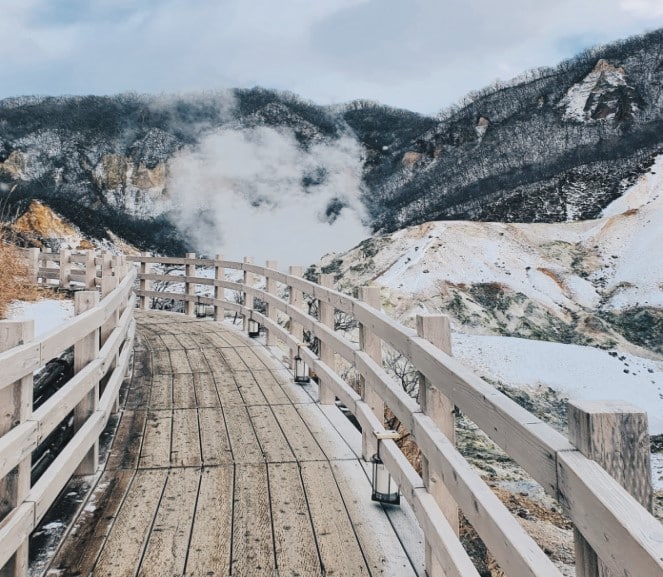
What makes this town special is Jigokudani (Hell Valley)—a dramatic, otherworldly landscape of steaming vents and sulfurous craters. Even if you’re not soaking, the trails and scenic views here are unforgettable.
Don’t miss: Dai-ichi Takimotokan’s massive indoor/outdoor baths, walking through Hell Valley, and sampling Hokkaido’s seafood specialties.
Why Visit Onsen Towns in Japan in 2025?
The year 2025 is shaping up to be an excellent time to explore Japan’s traditional onsen towns. Post-pandemic tourism has reignited interest in slow travel, wellness, and nature, and these towns deliver all three in a deeply cultural context. Additionally, many ryokans and towns are investing in sustainable tourism, multilingual services, and digital reservations to enhance the visitor experience.
Whether you’re a solo traveler seeking quiet reflection or a couple looking for a romantic escape, onsen towns in Japan offer something truly special. Plus, soaking in a centuries-old hot spring while surrounded by mountains or snow? That’s the kind of travel memory that lasts a lifetime.
Final Tips for Visiting Onsen Towns
Respect the rules: Shower before entering, and avoid bathing if you have tattoos (unless the facility allows it or offers cover-ups).
Pack light: Most ryokans provide towels, yukata robes, and toiletries.
Try local food: Many onsen towns have regional specialties—don’t miss the chance to dine in.