
Japanese folklore brims with fascinating creatures called yokai, but few captivate the imagination quite like the kitsune. These mythical fox spirits have woven themselves into the fabric of Japanese culture, leaving an indelible mark on literature, art, and modern pop culture. But what exactly is a kitsune, and why do these vulpine entities continue to bewitch audiences worldwide? Let’s embark on a journey to unravel the mysteries surrounding these enigmatic beings.
The Origins and Evolution of Kitsune Lore
The concept of supernatural foxes didn’t originate in Japan but rather found its way there through cultural exchange. Ancient Chinese texts dating back to the Han Dynasty (206 BCE – 220 CE) contain some of the earliest recorded tales of mystical foxes. As Buddhism made its way to Japan, bringing with it a wealth of continental folklore, the idea of magical foxes took root in the island nation’s collective imagination.
From China to Japan: A Transformative Journey
Initially, Japanese literature paid little attention to foxes. Early works like the Kojiki and Nihon Shoki, which compile Japan’s oldest myths and histories, barely mention these creatures. Instead, they focus on other animals with supernatural attributes, such as snakes, deer, and boars. However, by the 9th century, fox legends had firmly established themselves in Japanese lore, as evidenced by their appearance in the Nihon Ryōiki, a collection of Buddhist parables.
The Rise of Fox Worship
As fox tales proliferated, they began to intertwine with religious beliefs. By the 11th and 12th centuries, foxes were being venerated as deities in their own right. This elevation in status reached its pinnacle in the 14th century when foxes became closely associated with Inari, the Shinto god of agriculture, fertility, and success. This association effectively supplanted the snake’s long-standing role as a bringer of agricultural fortune.
The Dual Nature of Kitsune
Interestingly, as foxes gained divine status, they simultaneously developed a reputation for mischief and malevolence. Stories began to circulate about kitsune taking human form to deceive people or even possess them. This duality in their nature – both benevolent and potentially dangerous – became a defining characteristic of these mythical beings.
Physical Attributes and Supernatural Powers
At first glance, kitsune may appear indistinguishable from ordinary foxes. However, these mythical creatures possess an array of extraordinary abilities that set them apart from their mundane counterparts.

The Significance of Multiple Tails
One of the most distinctive features of kitsune is their potential to grow multiple tails. According to legend, they can have up to nine tails, with each additional tail representing an increase in power and wisdom. The process of gaining tails is said to occur over centuries, with a new tail sprouting every hundred years.
Shape-shifting Abilities
Perhaps the most renowned power of kitsune is their ability to shape-shift. These crafty creatures are said to be able to assume various forms, with a particular penchant for transforming into beautiful women. This talent for metamorphosis is often central to tales of these foxes tricking unsuspecting humans or even entering into romantic relationships with them.
Fox-Fire and Illusions
Kitsune are also associated with mysterious phenomena such as fox-fire (kitsunebi) and the creation of illusions. Fox-fire refers to strange, ghostly lights often seen in remote areas, attributed to the magic of kitsune. The ability to create illusions allows them to confound and bewilder humans, often as a form of punishment or mischievous play.
Other Supernatural Abilities
Beyond these core powers, kitsune are credited with a range of other supernatural abilities. These may include possession of humans (kitsune-tsuki), the power to enter dreams, and even the ability to bend time and space. Some stories also suggest that they can fly, become invisible, and generate infinite copies of themselves.
Kitsune in Japanese Folklore and Religion
The role of kitsune in Japanese culture extends far beyond mere folktales, intertwining deeply with religious beliefs and practices.
Inari’s Messengers
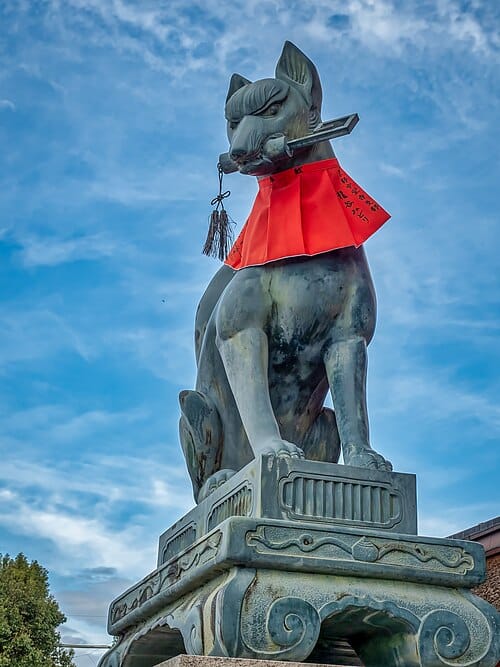
In Shinto belief, kitsune serve as messengers for Inari, the deity of rice, prosperity, and success. This association has led to the widespread presence of fox statues at Inari shrines across Japan. These stone foxes, often depicted holding symbolic items like keys or scrolls in their mouths, are believed to act as both guardians of the shrine and conduits for worshippers’ prayers.
The Celestial Fox: Tenko
At the pinnacle of kitsune hierarchy sits the celestial fox, or tenko. These legendary creatures are said to possess immense wisdom and power, often appearing as ethereal, white-furred foxes with multiple tails. In some traditions, tenko are believed to ascend to the heavens, gaining the ability to influence cosmic events.
Kitsune in Buddhist Traditions
While primarily associated with Shinto, kitsune also feature in Buddhist lore. Some Buddhist texts describe foxes as reincarnations of humans who have committed grave misdeeds, forced to live as animals to atone for their sins. Conversely, other stories portray them as bodhisattvas, enlightened beings who choose to remain in the mortal realm to guide others toward enlightenment.
Regional Variations in Kitsune Lore
As with many aspects of folklore, kitsune legends vary across different regions of Japan. In some areas, foxes are seen as predominantly benevolent creatures, while in others, they’re viewed with suspicion and fear. These regional differences have contributed to the rich tapestry of their mythology that exists today.
Famous Kitsune in Japanese Mythology
Throughout Japanese history, certain kitsune have achieved legendary status, their stories passed down through generations.
Tamamo-no-Mae: The Infamous Nine-Tailed Fox
Perhaps the most renowned kitsune in Japanese mythology is Tamamo-no-Mae. This legendary creature is said to have taken the form of a beautiful woman who became the favorite courtesan of Emperor Toba in the late Heian period. According to the tale, Tamamo-no-Mae was actually a malevolent nine-tailed fox from the Asian continent, intent on destroying Japan. Her true nature was eventually exposed by the court astrologer Abe no Yasunari, leading to a dramatic chase and her eventual demise.
Kuzunoha: The Fox Wife
Another famous kitsune tale revolves around Kuzunoha, a fox who takes human form and marries a man named Abe no Yasuna. Unlike many stories of fox wives, Kuzunoha is portrayed as a loving and devoted spouse. However, when her true nature is discovered, she is forced to leave her human family, leading to a poignant tale of love and loss.
The Fox of Inari
While not a specific individual, the concept of the Inari fox holds a significant place in Japanese mythology. These white-furred messengers of Inari are considered holy and are often depicted in art and literature as wise, benevolent beings who bring good fortune to those who honor them.
Kitsune in Japanese Art and Literature
The allure of kitsune has inspired countless artists and writers throughout Japanese history, resulting in a rich body of fox-related works.
Visual Representations
In traditional Japanese art, kitsune are often depicted in their fox form, sometimes with multiple tails or surrounded by mysterious fox-fire. When shown in human form, they’re typically portrayed as beautiful women, often with subtle fox-like features such as slightly pointed ears or a glimpse of a tail.
Literary Appearances
Kitsune feature prominently in Japanese literature, from ancient texts to modern novels. Classic works like “The Tale of Genji” make reference to fox possession, while later literature often explores the complex relationships between kitsune and humans. In many stories, they serve as symbols of cunning, wisdom, or the mysterious forces of nature.
Noh and Kabuki Theater
Traditional Japanese theater forms have also embraced kitsune lore. Noh plays like “Kokaji” and “Sesshōseki” feature fox characters, while Kabuki productions often include spectacular transformations between human and fox forms.
Kitsune in Modern Popular Culture
The fascination with kitsune has not waned in modern times. If anything, these mythical creatures have found new life in contemporary media and entertainment.
Anime and Manga
Kitsune have become staple characters in Japanese animation and comics. Series like “Naruto” feature powerful nine-tailed fox spirits, while others like “Spice and Wolf” explore the more human aspects of their mythology. The popularity of these portrayals has introduced kitsune lore to a global audience.
Video Games
The gaming world has also embraced kitsune mythology. From the Pokémon Ninetales to characters in fighting games and RPGs, fox spirits have become recurring figures in virtual worlds. Their shape-shifting abilities and magical powers make them particularly well-suited to the fantastical realms of video games.
Global Influence
Their appeal has spread far beyond Japan’s borders. Western authors have incorporated kitsune-like characters into their fantasy novels, while artists worldwide draw inspiration from these mystical foxes. This global interest has led to a fascinating blend of traditional lore with new interpretations and cultural influences.
The Psychology Behind Kitsune Legends
The enduring popularity of kitsune myths raises intriguing questions about their psychological and cultural significance.
Foxes as Liminal Creatures
In many cultures, foxes occupy a liminal space between the domestic and the wild. This in-between nature makes them perfect vessels for exploring themes of transformation and the blurring of boundaries between different realms of existence.
Kitsune and Human Nature
Many kitsune stories serve as allegories for human behavior and societal norms. Tales of fox wives, for instance, often explore themes of otherness and the challenges of integrating into society. Stories of the foxes trickery can be seen as cautionary tales about the dangers of deception and the importance of discernment.
Spiritual and Psychological Interpretations
Some scholars have interpreted kitsune possession (kitsune-tsuki) as early attempts to explain mental illness or unusual behavior. From this perspective, their legends can be seen as a cultural framework for understanding and coping with psychological phenomena that were poorly understood at the time.
Shinto and Buddhist Practices
The influence of kitsune extends beyond mythology into religious practices and beliefs.
Inari Worship and Fox Symbolism
Inari shrines, with their iconic rows of red torii gates and fox statues, are among the most numerous in Japan. Worshippers often leave offerings of fried tofu, believed to be a favorite food of foxes, at these shrines. The prevalence of fox imagery in Inari worship underscores the deep connection between kitsune and concepts of prosperity and agricultural abundance.
Kitsune-tsuki: Fox Possession in Religious Context
While often viewed negatively, fox possession has also been incorporated into certain religious practices. Some shamanic traditions in Japan have involved intentional fox possession as a means of divination or healing. This practice highlights the ambivalent nature of kitsune in Japanese spirituality – potentially dangerous, yet also sources of wisdom and power when properly approached.
Buddhist Perspectives
In some Buddhist interpretations, kitsune are seen as manifestations of maya, or illusion. Their shape-shifting abilities and creation of illusions serve as metaphors for the impermanent and deceptive nature of the material world. Some Buddhist texts also describe methods for protecting oneself against malevolent fox spirits, blending folk beliefs with religious practice.
Scientific Explanations for Kitsune Phenomena
While kitsune are mythical creatures, some of the phenomena associated with them have potential scientific explanations.
Fox-Fire and Bioluminescence
The mysterious lights attributed to kitsune, known as fox-fire, may have a basis in natural phenomena. Bioluminescent fungi or insects, for instance, can create eerie glowing effects in forested areas, potentially giving rise to tales of supernatural fox-fire.
Shape-Shifting and Optical Illusions
The kitsune’s famed ability to shape-shift might be rooted in the human brain’s tendency to see patterns and faces in ambiguous stimuli. In low light or misty conditions, the movement of a fox could potentially be misinterpreted as a human figure, giving rise to tales of transformation.
Fox Possession and Mental Health
Modern psychology offers various explanations for what was once termed fox possession. Conditions such as dissociative disorders or certain forms of psychosis might account for the behavioral changes traditionally attributed to kitsune-tsuki.
Kitsune in Contemporary Japanese Society
Despite Japan’s modernization, kitsune continue to hold a place in the country’s cultural landscape.
Modern Interpretations of Kitsune Lore
While belief in literal fox spirits has waned, the symbolism of kitsune remains potent in Japanese society. Foxes continue to be associated with cunning, wisdom, and transformation, influencing everything from business practices to personal development philosophies.
Tourism and Local Culture
Many areas of Japan capitalize on their kitsune-related folklore to attract tourists. The city of Edo, for instance, has embraced its association with the legendary Tamamo-no-Mae, incorporating fox imagery into local attractions and souvenirs.
Contemporary Art and Fashion
Modern Japanese artists and designers often draw inspiration from kitsune lore, creating works that blend traditional motifs with contemporary aesthetics. Fox-inspired fashion, from subtle accessories to elaborate costumes, has also gained popularity both in Japan and internationally.
The Global Appeal of Kitsune Mythology
The fascination with kitsune has spread far beyond Japan’s shores, captivating audiences worldwide.
Kitsune in Western Media
Western authors and filmmakers have increasingly incorporated kitsune-like characters into their works, often blending Japanese folklore with their own cultural traditions. This cross-pollination has led to new and intriguing interpretations of the kitsune myth.
Kitsune in Neopagan and New Age Practices
Some Western spiritual practices have adopted kitsune as spirit guides or totems, interpreting these mythical foxes through the lens of their own belief systems. This appropriation, while controversial, speaks to the universal appeal of the kitsune’s symbolic attributes.
Academic Interest in Kitsune Lore
Scholars of folklore, anthropology, and religious studies have shown increasing interest in kitsune mythology. These academic explorations provide new insights into the cultural significance of fox spirits and their place in the broader context of world mythology.
In conclusion, the kitsune stands as a testament to the enduring power of mythology in the modern world. These shape-shifting foxes, with their blend of divine wisdom and earthly mischief, continue to capture our imagination, bridging the gap between ancient folklore and contemporary culture. Whether viewed as literal spirits, psychological archetypes, or simply captivating characters in stories, these mythical foxes remain an integral part of Japan’s cultural heritage and a source of fascination for people around the globe. As we continue to explore and reinterpret these mythical beings, the allure of the kitsune seems likely to persist, reminding us of the magic that still lurks in the shadows of our increasingly rational world.








.jpg)