
Risk Versus Trying One’s Luck
Oftentimes, Japanese people are thought to be very risk-averse. For example, during business deals, its very common for sales pitches or mergers to be denied unless managers feel the risk is effectively zero. However, when you look closer into the every day happening’s of a Japanese person’s life, you start to see that many people love the sensation of trying one’s luck. Look no further than Omikuji fortunes found at almost every shrine, or more recently the gachapon capsule toys found everywhere across Japan. It seems the difference is that risk has a negative connotation, but when framed as trying your luck, then it’s seen as something positive in Japan. So it’s no wonder that gambling, or more specifically pachinko is such a hit in Japan. But exactly what is pachinko?
What is Pachinko?
The easiest way to describe pachinko is to think of a pinball machine, but instead of lying horizontal, the machines are vertical. The pachinko machines are also a little smaller than a pinball machine, and the metal balls are also smaller than a pinball. The balls are loaded into the machine, then shot inside. The balls bounce down through the prongs, while the player hopes to get the balls into special spots on the board. These special spots are what players are aiming for as they award you with more pachinko balls, that allow players to keep playing.

The game is basically gambling, but that is problematic because gambling is normally illegal in Japan. So if it’s illegal, how is it that every year pachinko revenue is over $200 billion? (Which, by the way, is equivalent to the GDP of countries like Greece or New Zealand.) The way pachinko parlors are able to stay in business is through a loop-hole in the legal system. The loop-hole puts them in a legal grey zone that still allows you to gamble and win money.
People aren’t allowed to exchange the pachinko balls they win for money, nor can they take them out of the parlor; however, players are allowed to trade the balls in for “prizes”. When finished playing, players call an attendant over and use a special machine to dump the balls in and count them. The machine then prints a ticket with the number of balls they had. Players can then trade in this ticket for prizes at the pachinko parlor like someone would with tickets at Dave and Busters or Chuck E. Cheese in the United States. If a player wants a cash prize however, they can take their ticket to a completely separate location, normally across the street and cash-in the ticket for actual money.
That’s the loop-hole. The parlor doesn’t give out money for “gambling”, they just print a ticket and some other shop (normally still owned by the same person as the parlor) just happens to pay money for said ticket. Even though the shops shouldn’t be associated in any way, it doesn’t seem the police or government really care. Everyone knows about the loop-hole, but when $200 billion in revenue is coming in, it’s no wonder everyone turns a blind-eye.
A Brief Look at Pachinko’s History
Pachinko has its roots in the early 1900s when game manufacturers created the Corinth game in Chicago, which was a children-sized version of Bagatelle pinball. By the 1920s, Corinth made its way to Asian markets and quickly took off in Japan. It was common to see them in Japanese candy stores to keep children at the store, eating and buying more snacks.
Like many things in Japan, it began to be referred to by a nickname based on an onomatopoeia, “pachi pachi”, which referred to the snapping and banging sounds the game made while the balls moved through the machines. By the 1930s, the game was turned vertical and became larger, as more adults started to enjoy it. This didn’t last long though as many of the machines were scrapped for metal during World War II.
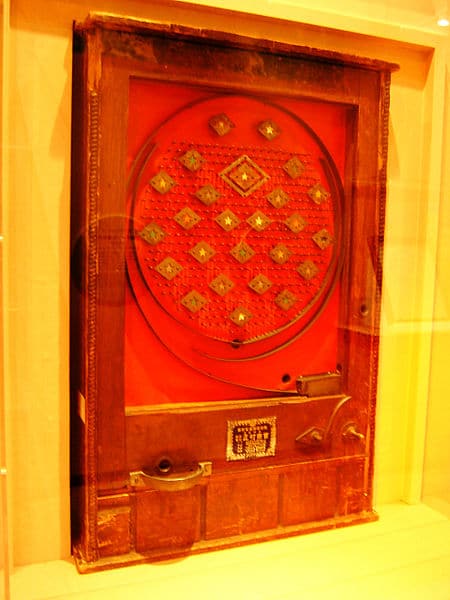
The game all but disappeared until after the war in the late 1940s. In 1948, the first commercial Pachinko parlor was opened in Nagoya. Pachinko quickly took the country by storm and exploded in popularity over the years. The machines were almost completely mechanical up until the 1980s, where they started to be replaced by electronic ones. Now pachinko machines are an explosion of lights, and sounds. Some have screens with little mini games and are overall a bit more complex than their mechanical predecessors.
The Popularity of Pachinko
It’s hard to say why pachinko became so popular exactly. However, it may just be because it filled that gambling void that Japan was craving. It is human nature to want to try one’s luck. So when a method to circumvent the law was discovered and allowed for pachinko, it just makes sense as to why it has become so popular. Regardless, pachinko parlors are fun, loud and a great way scratch the gambling itch.






not afraid of the road, only afraid of short.
Valuable information and awesome webdesign you got here! I would like to thank you for sharing your ideas and time into the stuff you post!! Thumbs up