What Is a Ryokan
Ryokan are traditional Japanese inns and are quite different from a typical Western-style hotel. Ryokan can be found all throughout Japan and provide a very unique experience for foreign tourists. This is because they incorporate many aspects of traditional Japanese culture and hospitality. These special amenities include sleeping on futon beds, Japanese style baths and onsen, Tatami mat rooms, and delicious traditional multi-course Japanese meals.
Types of Ryokan
There are many different types of ryokan, and the experience from one to the next can vary.
There are “no-frills” simple ryokan that are often much cheaper than others. While they have a traditional Japanese aesthetic, they lack the amenities and attention to detail provided by the higher priced ryokans.
On the opposite end of the spectrum are the luxury ryokan where each guest is treated like a king or queen. The rooms, food, and service will be top-notch and the price tag follows suit. Despite the hefty cost, many people find the experience worth it.
Traditional ryokan are ones where the building is best preserved in its original state. They provide a chance to experience an even greater understanding of traditional Japanese culture. Because they are usually very old, they can be draftier, darker, and not quite as comfortable as other more typical ryokan.
Counter to traditional ryokan, modern ryokan provide the look and feel of traditional Japanese aesthetics, but with more modern conveniences like insulation, beds rather than futons, and central heating. Modern ryokan are great if you want to be comfortable, but still feel like you’re in a traditional Japanese inn.
More conspicuous are ryokan hotels that look like a normal hotel on the outside and interior lobby. The rooms, however, are Japanese-style rather than the typical western-style. They also usually contain amenities like bars and karaoke rooms in the hotel.
Cost
With prices between 4000 yen (~$40) to over 50,000 (~$500) per night, ryokan can be pretty expensive for the more luxurious and fairly cheap for the simplest. The average ryokan is closer to $150 – $250 per night, which is more reasonable. However, it should be noted that it’s normally per person and not per room. Also, some ryokan don’t accommodate solo travelers and require multiple guests. If you are traveling solo, then it is still possible to stay at a ryokan, but you’ll want to check and make sure before planning your stay.
How to Stay in a Ryokan
Making a Reservation
For most ryokan you can book your stay online using major booking websites. However, most of the time it’s not possible to make a reservation the same day, as your meal requires preparations that must be prepared in advance.
Check-In
When arriving at a ryokan, you’ll first need to take your shoes off in the genkan (entranceway area). If you aren’t familiar with a genkan, they are normally lower than rest of the building. You take your outside shoes off in the lowered portion and put on slippers once you ascend the step-up to the elevated area. Not all ryokan have the genkan at the entrance to the building, but instead at the entrance of your room.
After entering, guests receive a courteous welcoming from the attendants and the Okami (Traditional manager of a ryokan). Most check-ins occur around 3 p.m. and can take place either in the lobby, at a reception desk like a normal hotel, or in the guest’s rooms. Tea and snacks are usually offered while filling out the check-in paperwork.
During your stay, you’ll receive an attendant who will take care of you throughout your entire visit. They will help you check in, prepare your room, and serve your meals.
Rooms
The look of each room can vary depending on what kind of ryokan you are staying at. For the average ryokan room, they will contain tatami mat floors with a low table in the middle of the room and have a small sitting room off to the side with western-style table and chairs.
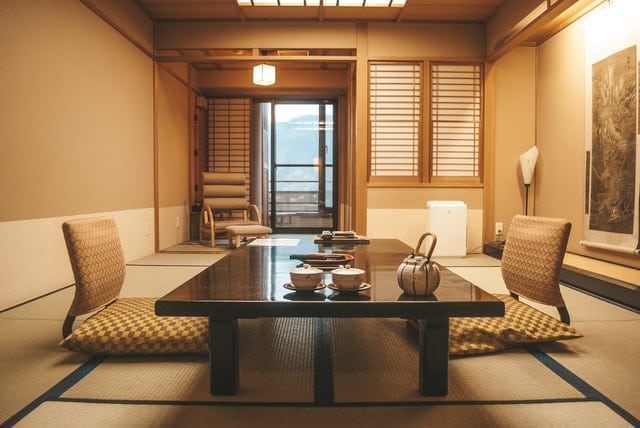
Unless you’re staying in a modern style ryokan, guests sleep on a futon which is a Japanese mattress that lays on the floor. During the day the futons are stored away in the closet and are prepared in the evening, usually by the staff while you eat your meal.
Along with the futon, your room will also contain towels and washcloths, as well as a yukata. Yukata literally means bathrobes and they were made with that original intention in mind. They are used more broadly now and typically worn as an unlined cotton kimono in the summer during festivals.
There will also typically be a bathroom with a sink and western-style toilet. Some older ryokan may have shared sinks/toilets in common areas. Rooms usually include a mini-fridge, TV, and safe, as well as some complimentary items like tea, a snack, and toothbrushes.
It’s important to remember to not wear your slippers in the tatami mat room. When in the bathroom, there should be another pair of slippers that are specifically designated for that room and should only be used there.
Hot Baths and Onsen
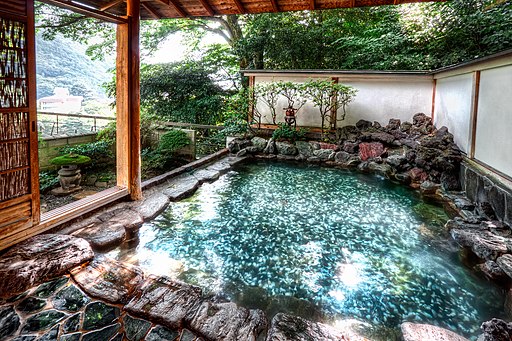
Hot baths, normally from an onsen (hot spring), are very popular to indulge in when visiting a ryokan. Depending on the ryokan, most have a range of gender segregated baths and some will have mixed gender or private baths available. In some of the more high-end ryokans, guests have their own private onsen in their room.
Dinner
Meals served at ryokans are typically multi-course Japanese haute cuisine called kaiseki ryori. The meal usually features local cuisine with many smaller dishes prepared with different methods. This includes an appetizer first, then soup, a raw dish, boiled dish, grilled dish, deep-fried dish, steamed dish, rice, miso soup and a dessert at the end. All are meticulously prepared and beautifully presented, making the meal exquisite in not just taste, but also presentation.

Depending on the ryokan, meals are served either in your room, a private dining room, or in a communal dining room. Many people wear their yukata for dinner and breakfast, but normal clothes are perfectly fine as well.
Breakfast
Similarly for breakfast, many ryokans serve a Japanese-style breakfast with rice, miso soup and several other dishes with seasonal specialties. Some may also offer Western-style options and other larger ryokan might instead have buffets with Japanese and Western foods available.
Check Out
At most ryokans, check-out is at either 10 or 11 am. While guests can leave early, there is no rush. When it is time for departure, the staff will be at the entrance to see their guests off, bowing repeatedly and thanking them for their stay.
A Relaxing and Rewarding Experience
Staying at a ryokan may seem daunting, but it can be a very relaxing and rewarding experience. This is especially true if you’ve done it before or at least done a little research and know what to expect. If traditional Japanese culture is of interest to you, then staying at a ryokan is a must try when visiting Japan!