What is Ramen?
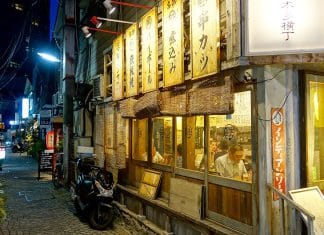
Ramen is a Japanese noodle soup that was adapted from Chinese wheat noodles. The dish consists of the Chinese wheat noodles, a broth (typically meat or fish based), a flavoring/seasoning, and a wide array of toppings like pork, boiled egg, scallions and nori (dried seaweed). The types of ramen discussed below get their names from the flavoring added to the broth. This famous dish has become very popular in Japan over that last few decades and the invention of instant noodles has allowed for a faster, albeit not as tasty version of ramen, to be made everywhere easily.
Common Toppings
There are many commonly used toppings, and most ramen contain several in each bowl.
- Chāshū (sliced pork)
- Negi (green onion)
- Bean sprouts
- Kakuni (braised pork cubes or squares)
- Nori (dried seaweed)
- Wakame (unpulped dried seaweed)
- Takana-zuke (Pickled and seasoned mustard leaves)
- Kamaboko (formed fish paste, often in a pink and white spiral called narutomaki)
- Menma (lactate-fermented bamboo shoots)
- Egg (hard/soft boiled, raw or marinated eggs)
- Corn
- Butter
Broth
Broth is normally made by simmering chicken or pork bones, sometimes both, in water. Some broth contains dashi stock, which is made from bonito (dried fish flakes) and Kombu (kelp). Sometimes it’s made with fresh fish, however it’s rare to see a beef broth. To finish the soup, the broth is then combined with one of the four common flavorings.
Four Common Ramen Types
Ramen flavors are broken down and defined depending on the soup base. There are four main types of Ramen: Shio, Shoyu, Miso and Tonkotsu. While there are versions of ramen that either combine the broths or don’t use any of these at all, these are by far the most common.
Shio (塩, Salt)
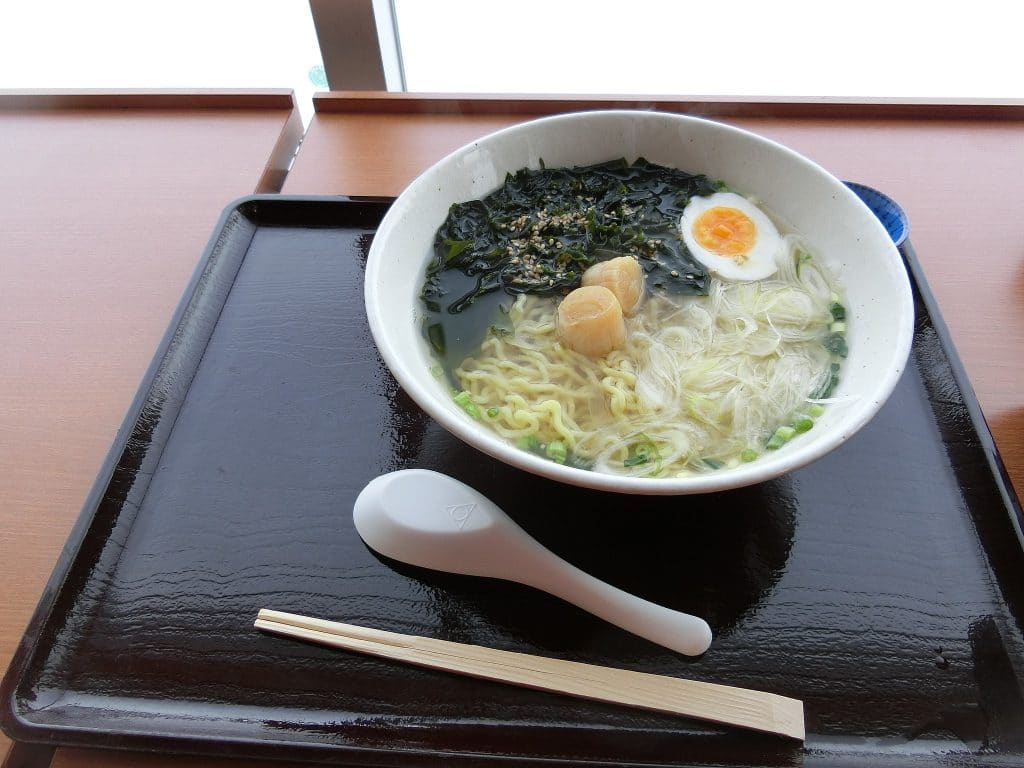
Shio is considered the traditional ramen soup flavor because it is the oldest. The broth is seasoned with salt and is typically lighter than the other types. Normally, it’s made from chicken or pork broth, and it has a clear yellow color.
Shoyu (醤油, Soy Sauce)
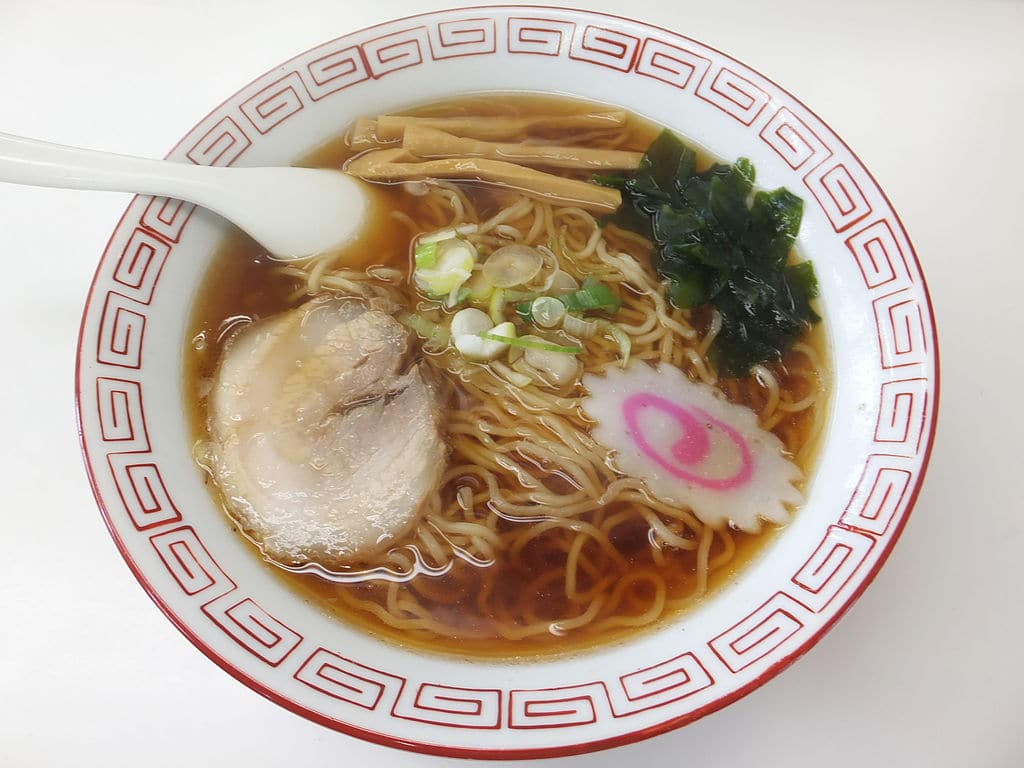
Shoyu is seasoned with soy sauce rather than salt. The broth for Shoyu is normally made from chicken rather than pork. Shoyu broth is normally darker and a tad sweeter than Shio. It’s the most common type of ramen and if a restaurant doesn’t specify the type, then it’s probably Shoyu.
Miso (味噌, Soybean Paste)
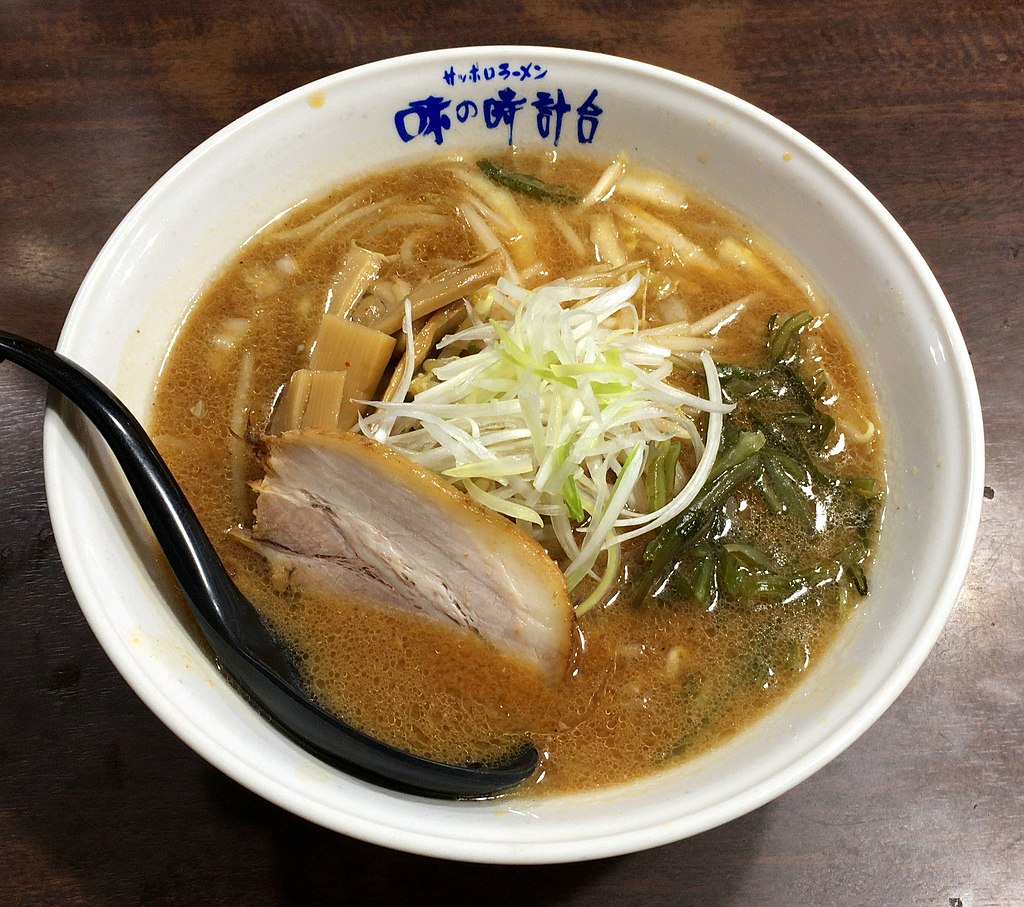
Miso is a soybean paste that thickens the soup and provides a savory and rich taste. Miso soup is cloudier when compared to Shio or Shoyu broth. Originally from Hokkaido, Miso broth will be heartier and more complex than Shio or Shoyu which mainly accent the chicken or pork, rather than add more flavor.
Tonkotsu (豚骨, Pork Bone)
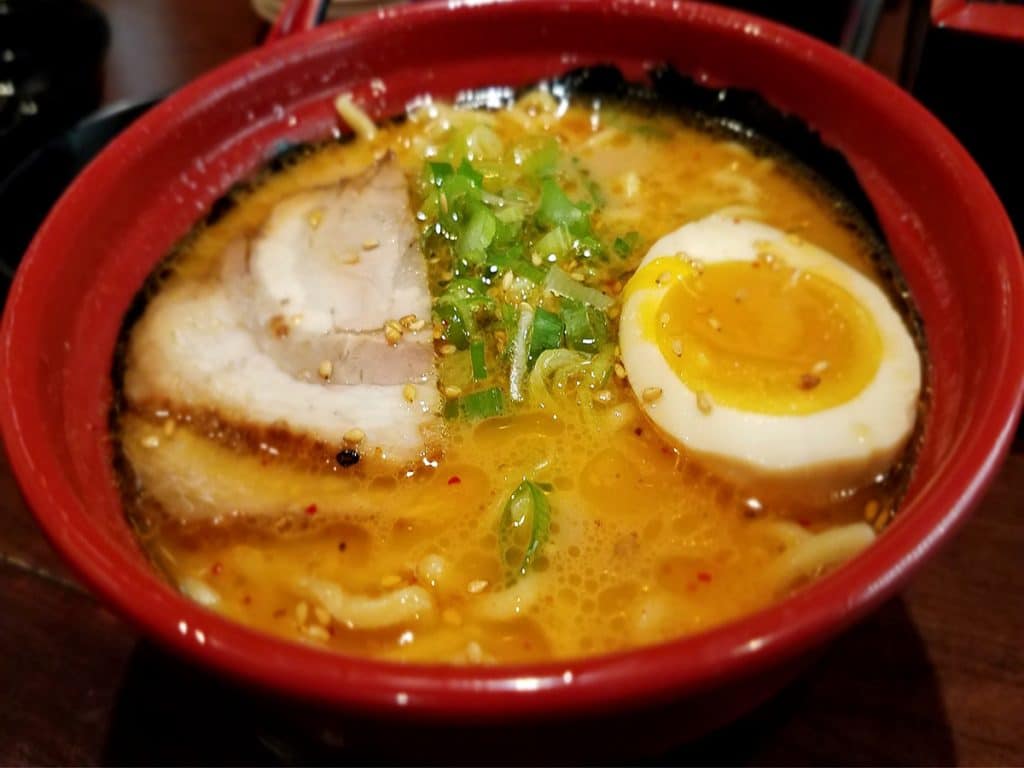
Tonkotsu is made from pork bones that are boiled for 12 or more hours until the bone collagen has dissolved. This creates a broth that is heavy and creamy. Tonkotsu is most popular around Kyushu. Like Miso, Tonkotsu broth is cloudier than Shio or Shoyu broth.
Ramen Noodles
Ramen noodles are made from wheat flour, water, salt and kansui (鹹水). Kansui is salt water; or more specifically, an alkaline water that contains sodium carbonate and potassium carbonate. Udon is also made from wheat flour, but doesn’t contain the kansui. The noodles are normally long and stretchy, but can vary in thickness, as well as be either straight or wavy. Some restaurants allow you to choose the thickness and texture of your noodles.
Instant Ramen
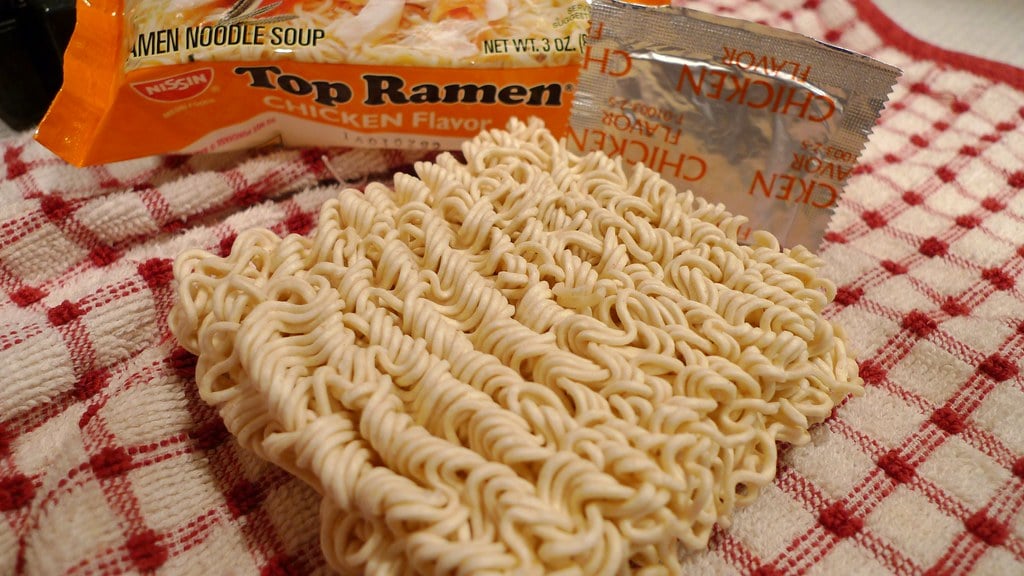
According to the World Instant Noodle Association, instant noodles were first created in 1958 by Momofuku Ando from Nissin Foods, and were first branded as Chikin Ramen. Instant noodles are made from precooked noodles that are dried and include a flavored powder and/or seasoning oil. The dried noodles are made to be cooked or soaked in boiling water and then have the seasoning added. There aren’t normally many toppings included in instant ramen, but you can always add your own. It’s hard to compare instant ramen to handmade ramen as they excel in opposite areas – the convenience of instant ramen is unparalleled, while the taste of handmade ramen is certainly worth the effort.