A Prefecture of Islands
Okinawa Prefecture is Japan’s southernmost prefecture and is located in the Kyushu Region. Consisting of many small islands, the prefecture is spread out across the ocean. The islands in the prefecture are made up of the southern two-thirds of the Ryukyu islands. These islands are in the sub-tropical zone and remain warm and humid year-round. The population of the prefecture is about 1.45 million people with a geographic area of about 2280 km2.
Brief History
In the 14th century, the islands were originally broken up into three kingdoms during the Sanzan (三山, Three Mountains) period. They were later unified as a tributary state of China in 1429 and would then be known as the Ryukyu Kingdom. In 1609, Japan invaded the Ryukyu Islands. The kingdom was forced into a vassal relationship with the Satsuma domain. They were not officially absorbed into Japan, at least not right away, as this would have angered China. It wasn’t until 1872 that they were formed into the Ryukyu Domain of the Japanese Empire.
Islands and Cities
The prefecture contains many islands, some of which are pretty small and others that are virtually uninhabited. The major islands can be separated into a few groupings: The Okinawa Islands, Miyako Islands, Yaeyama Islands, Senkaku Islands, and the Daito Islands.
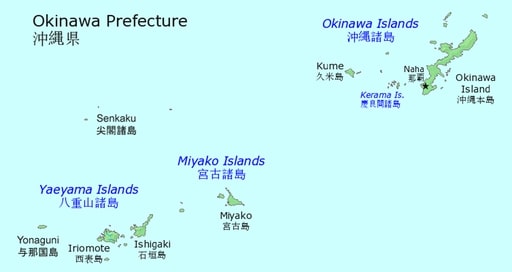
There are eleven cities in Okinawa Prefecture:
- Ginowan
- Ishigaki
- Itoman
- Miyakojima
- Nago
- Naha
- Nanjō
- Okinawa
- Tomigusuku
- Urasoe
- Uruma
Many of the towns have been renamed from the Okinawan language to Japanese. For example, the capital city of Naha was originally called Nāfa or Nafa, but was changed to better fit the Japanese language. Along with the 11 cities, there are also dozens of towns, most of which are found on the main island, Okinawa.
Plants and Wildlife
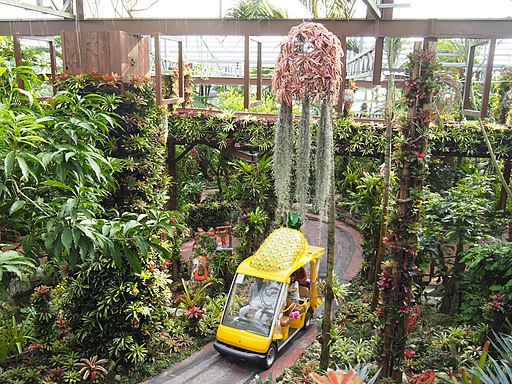
Okinawa has a wide variety of both flora and fauna that thrives, as expected, on a sub-tropical island. Many prefectures are famous for a certain type of fruit. Okinawa’s fruit is the pineapple. They even have a theme park for it called Nago Pineapple Park. Okinawa also produces other fruits like papayas, and is a major sugar cane producer.
For fauna, there is the extremely endangered Iriomote cat, which is one of the world’s rarest cat species and only lives on the island of Iriomote. Several kinds of snakes, like the Habu, and many spiders and insects also fill the islands. The endangered dugong and sea turtles, as well as countless fish, venomous jelly fish and so many other aquatic animals inhabit the crystal-clear waters surrounding the islands. The islands are really teeming with life everywhere you look.
Population
Much of the population is made up of the indigenous Ryukyu people, but they aren’t officially recognized as being ethnically different than the Japanese by the Japanese government. There is still a much smaller, but not insignificant, part of the population that is ethnically Japanese. The population of the prefecture has been growing steadily since the 1960s and has almost tripled since the end of the second Word War from around 575,000 to almost 1.5 million in 2020.
Interestingly, the prefecture has the highest number of centenarians (people over 100 years old) of almost anywhere else in the world. Even compared to the generally long living persons of Japan, on average, Okinawans have an even longer life expectancy. Researchers have studied the population to try and understand why they live so long. Whether it’s diet or genetics related, both, or something else entirely, they have found the population has very low rates of heart disease, stroke, and cancer, which are three major killers of people in Western societies
Tourism
There is a lot to see and do in Okinawa prefecture, beautiful beaches, scenic views, diving and water sports, hiking, great food to try, unique cultural aspects from both Japanese and Ryukyu culture, war memorials and castle ruins, and so much more!
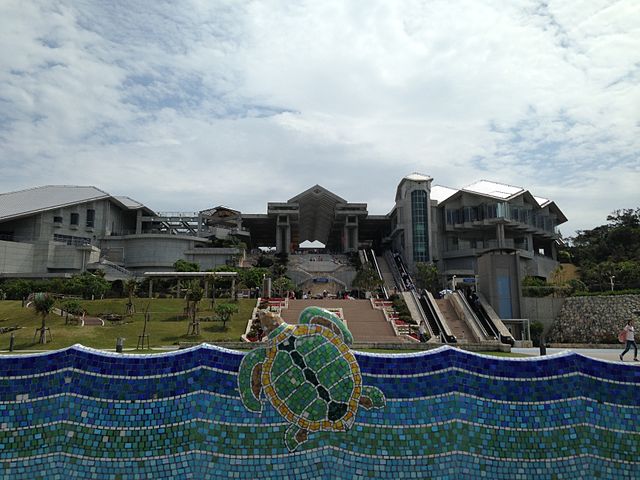
Here are a few amazing places to go check out in Okinawa: