If it’s your first-time visiting Japan, then it won’t be long until you start noticing the plethora of convenience stores scattered around. Also, if you talk to anyone that’s gone to Japan, it might be surprising how often they mention going to one. This may seem especially odd if you’re used to the typical gas station-esque convenience stores you’d find in the United States. However, this isn’t the case with konbini in Japan, which don’t have the same dirty connotation as their U.S. counterparts.
In Japan, convenience stores or konbini are an integral part of everyday life. Not only do they provide good, cheap, and quick food, but they also provide plenty of services that you might not expect.
The Big Three Konbini Chains
There are several different chains of konbini in Japan, but the three most common are Family Mart, 7-Eleven (Seven & I Holdings), and Lawsons. Each one is similar and you can find many of the same products and services regardless of which one you go too. However, there are still subtle differences and certain foods that can only be found in certain chains.
Most people have their preference on which konbini is best. Some people even like to debate who has the best version of ‘X’ product. For example, fried chicken is a hotly contested food item. Additionally, while the “Big Three” are the most common, there are other convenience store brands you might also see. The other stores include Ministop, Daily Yamazaki, and Poplar. While not as common, the smaller chains offer many of the same foods and services.
Types of Food and Drink Available
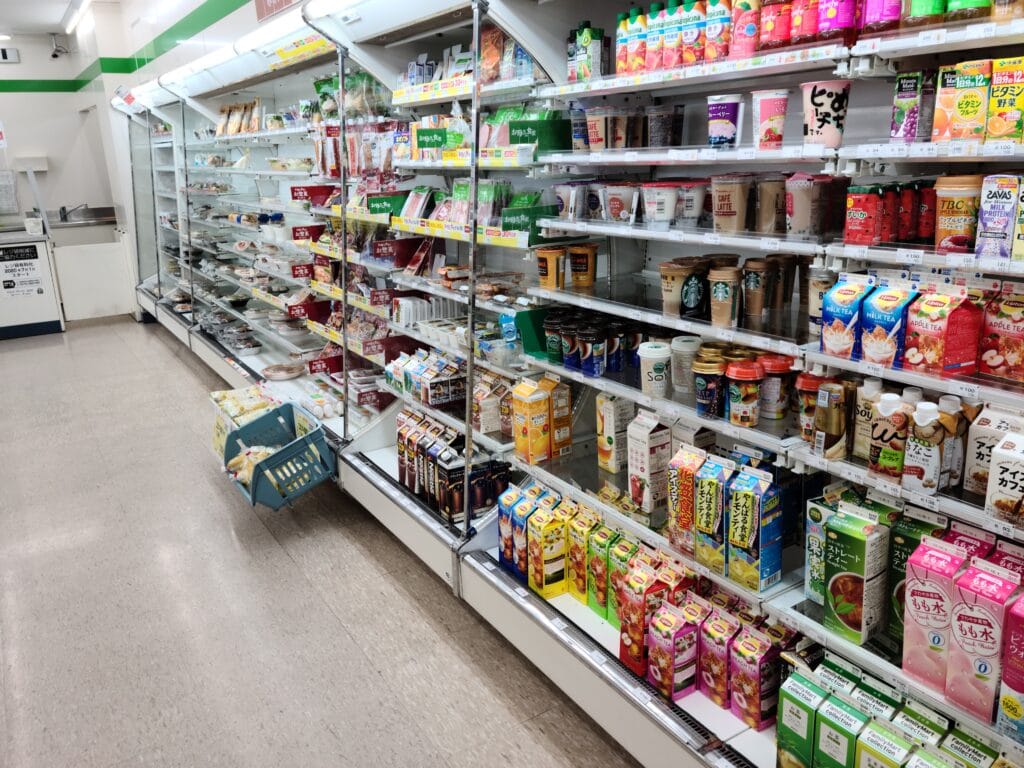
The types of foods you can expect from a konbini are foods that are either fully prepared, like onigiri and bento boxes; or partially prepared, like cup noodles that just need some hot water added. The staff will offer to warm up your food if you buy something that is supposed to/can be eaten warm. Additionally, there are plenty of snack foods to choose such as chips or melon bread. Here’s a list of common foods and drinks you’ll see:
- Onigiri (rice balls that are typically wrapped in nori, aka seaweed, with various fillings)
- Bento (assorted lunch boxes that typically include rice, meat/fish, and vegetables)
- Soba (buckwheat noodles that are sometimes served cold with dipping sauce)
- Anpan (a sweet pastry roll filled with various ingredients like red bean paste)
- Sushi
- Sandwiches
- Fried Chicken
- Beer
- Soda
- Tea
Services Available
In addition to the conventional food and drinks, konbinis are also known for their multitude of services found below.
Multipurpose terminals or kiosks can be used to purchase tickets for all sorts of things like sporting events, concerts, theme parks, buses and even planes. They also normally include a copier/fax machine.
ATMs can be found at most Konbini and you can withdraw cash if needed. Most ATMs accept foreign cards, but you can be sure that all of the 7-Eleven ATMs accept foreign cards.
Konbini payments are offline payments you can make at the konbini to make online purchase. This is useful if you don’t have or don’t want to use a credit or debit card online. When buying something online from a Japanese store you can select konbini payment. This will give you a transaction code that you can take to the convenience store to pay and finalize the purchase. You can pay either at the kiosk or through the cashier.
Pay utilities and other bills at the convenience store. All you have to do is take your bill and hand it to the cashier who will scan a barcode and you can pay in cash.
Sending/receiving packages can be done at some convenience stores. Not all offer this service, so you’ll have to ask beforehand. You can either send packages or even have packages shipped there for you to pick up. For example, Amazon Japan packages can be sent and picked up at the konbini.
You’ll also be able to find free Wi-Fi and some, but not all, have bathrooms you can use. As mentioned above you can buy alcohol, mainly beer. You’ll just need to answer ‘yes’ to a prompt on the touch screen confirming you are old enough to drink.
Konbinis are fun, convenient, and found on almost every street. Make sure to visit a few if you ever visit Japan to compare and contrast and figure out which is your favorite!